


The Art of Flavor Layering: How to Build Bold Indian Tastes from Your Raunak Bazar Grocery Cart
The Art of Flavor Layering: How to Build Bold Indian Tastes from Your Raunak Bazar Grocery Cart
Introduction
In Indian cooking, flavor isn’t just something you achieve — it’s something you build. Much like composing music, great Indian food is created by layering taste — sweet, sour, bitter, salty, pungent, and astringent — until it sings on the palate. While some cuisines rely on singular flavor punches, Indian cuisine rewards patience, intuition, and the right groceries.
At Raunak Bazar, you have access to every essential spice, grain, lentil, oil, and fresh produce that makes this layering possible. This blog explores how to intentionally build flavor, step by step, so that every dish you make — from a simple dal to an elaborate biryani — delivers unforgettable depth and complexity.
Why Flavor Layering Matters
Flavor layering is more than seasoning at the end of cooking. It’s about understanding how ingredients interact at different stages of heat, moisture, and timing. Proper layering:
- Maximizes aroma and texture
- Enhances nutrient release
- Balances sweetness and heat
- Allows dishes to develop personality
This technique separates average food from food that’s memorable — food that becomes part of family tradition.
1. Start with Aromatics — The Base of Every Dish
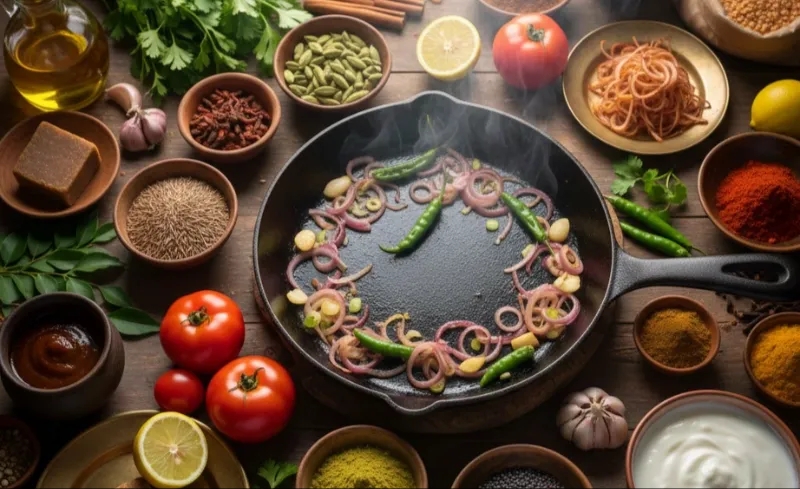
Every great Indian dish begins in the “aromatic phase.” These ingredients build the first layer of savory foundation:
- Onions
- Garlic
- Ginger
- Green chilies
Heat your oil gently and sauté these aromatics until they turn soft and translucent. This unlocks their natural sugars, creating a base that can carry every other note you add.
Tip: Use a neutral oil like vegetable or sunflower for everyday cooking, and mustard or ghee when cooking dishes where bold aroma matters.
2. Spice Blooming — Let Spices Speak
Once your aromatics are ready, add whole spices and ground spice blends. This step is called spice blooming, and it’s where the real magic happens.
Common whole spices you can pick up at Raunak Bazar:
- Cumin seeds
- Mustard seeds
- Cloves
- Cinnamon
- Cardamom
Add these to hot oil for about 30–60 seconds until they sputter and become fragrant. This lets the fat in the oil carry spices more deeply, enhancing flavor in every bite.
Ground spices like turmeric, coriander, and chili powder are added next. They mingle with the aromatics and develop richness without burning.
3. The Role of Acids — Vinegar, Yogurt, and Tamarind
Acidity brightens dishes and balances out richness. In Indian kitchens, aspects like yogurt, tamarind paste, lemon, and tomatoes often play this critical role.
For example:
- A squeeze of lemon at the end of dal lifts its earthiness
- Tamarind deepens the sourness in sambhar
- A dollop of yogurt cools spicy curries
These ingredients do more than taste sour — they bring harmony.
4. Sweetness and Bitterness — Subtle But Powerful
Many Indian dishes use sweetness to mellow heat and bitterness to create complexity.
Sweet ingredients:
- Jaggery
- Caramelized onions
- Sweet vegetables like carrots or peas
Bitter notes:
- Fenugreek
- Bitter gourd (karela)
- Mustard greens (sarson)
Don’t underestimate these elements — a small amount of jaggery can make spicy curries more rounded, while bitter greens add layers of earthiness.
5. Freshness in the End — Herbs and Final Touches
Once your dish has layered flavors from aromatics, spices, acids, and sweet/bitter elements, the final layer comes from fresh herbs and garnishes:
- Cilantro
- Mint
- Curry leaves
- Grated coconut
- Toasted nuts
These brighten the dish and add fresh contrast.
Mastering Popular Dishes with Layering
Here are examples where flavor layering matters:
Masoor Dal:
Aromatic sauté → turmeric + cumin → slow-cooked lentils → lemon + cilantro finish
Vegetable Biryani:
Whole spices → fried onions → layered rice → saffron milk → cool herb garnish
Aloo Gobi:
Cumin seeds in oil → turmeric + ginger → balanced salt + lemon → fresh cilantro
Conclusion — Flavor is a Journey, Not a Trick
Flavor layering is about intention, technique, and excellent groceries. With staples from Raunak Bazar — fresh produce, whole spices, authentic oils, and quality lentils — you can elevate everyday dishes into meals that are bold, balanced, and utterly satisfying.
Cooking this way doesn’t require complexity — just patience, curiosity, and a well-stocked pantry. Visit your Raunak Bazar grocery aisle today, and let your flavor journey begin.